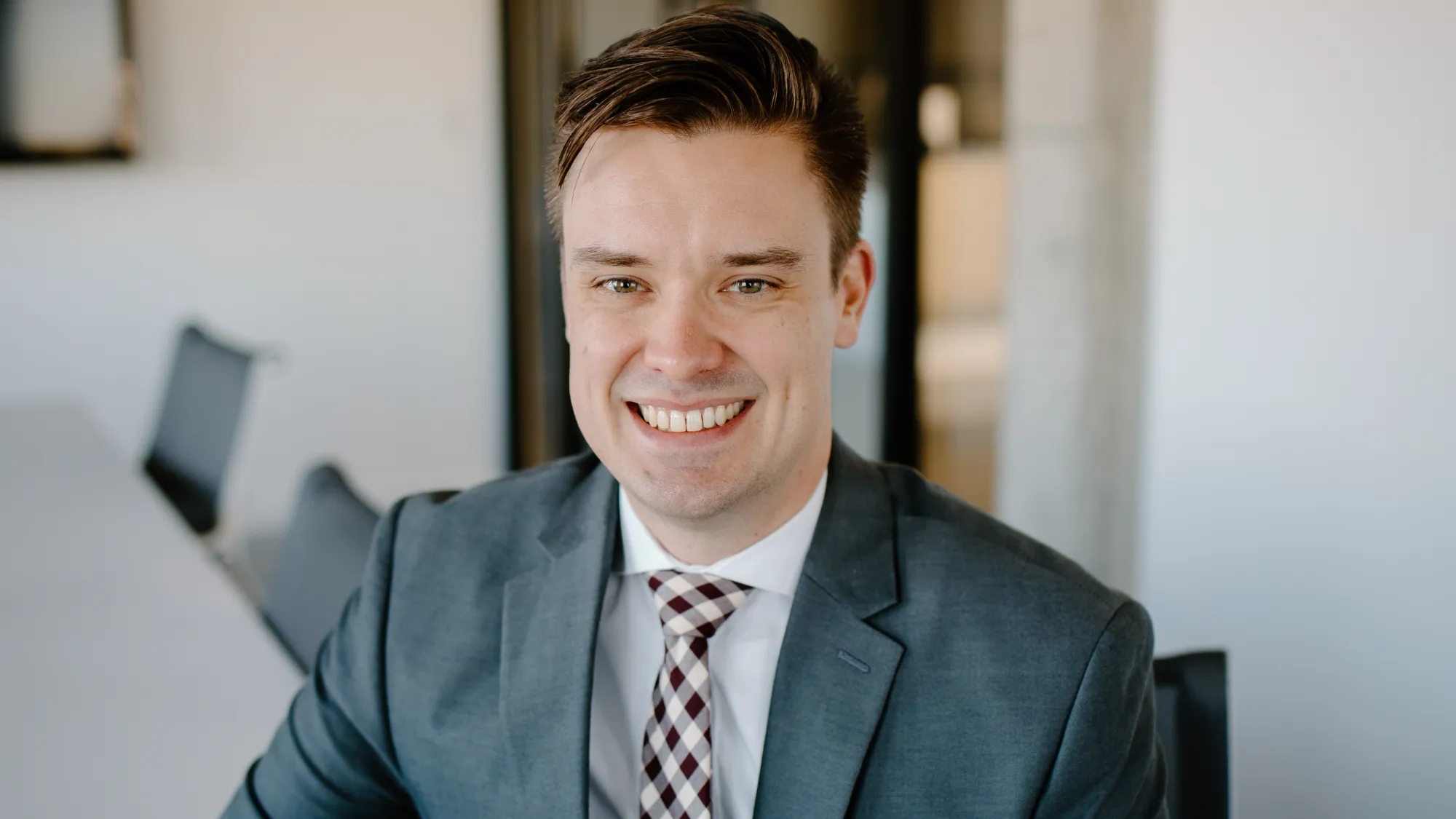
In this conversation, Joe reflects on his path to leadership, what drives great design, and his vision for DesignGroup's future.
Joe Mayer was recently named Managing Principal and Design Director for DesignGroup's Columbus, Pittsburgh, and Indy studios. A 15-year veteran of the firm, his early work on two significant projects—the Columbus Museum of Art and Battelle Darby Creek Nature Center—set the tone for a career defined by design excellence across a broad range of building types. Since then, he’s worked on everything from libraries to hospitals to community centers, developing an approach that balances confidence with humility and creative vision with pragmatic problem-solving of client needs.
“Joe has a unique way of putting our clients first while respecting and elevating our team members,” says DesignGroup President Jennifer Horvath. “His design process is very inclusive. He nurtures and advances the entire team.”
You joined DesignGroup in 2010, right out of graduate school. What were your first projects?
The Columbus Museum of Art Margaret M. Walter Wing and Battelle Darby Creek Nature Center. Coming out of school during the recession, I felt fortunate just to have a job. But to jump into projects like that right away was a dream come true. Both were very design-focused, high-profile public projects. I got to do a lot of design support, working through studies of the entry canopy, the special event space, and the copper panel patterning at the museum. On the Battelle Darby Creek project, I was involved from the very beginning with initial massing studies and site planning.
Those projects set the stage for how I think about design. The museum in particular was such an intensive, iterative process. It required real design focus and taught me that design is important and impactful. I've carried that mindset into everything I've worked on since.
Did you anticipate being in a design leadership role when you started your career?
Absolutely. I would have said that when I was 20 years old. I didn't know exactly how to define the position—because it didn't exist in this way 10 years ago, at least not here—but being in a design leadership role was always the goal.
Your new title combines Managing Principal and Design Director. How does this new role advance the firm's mission?
Historically, our design leadership rolled up through practice group leaders—typically managing principals who led either our market areas like healthcare, education, libraries, or civic and cultural. That structure worked well to a certain scale, but as we've continued to grow, there's been a recognition that one person can't be all things to all people within their group.
My role is about looking horizontally across offices and markets from a design standpoint. I provide design leadership more broadly, which gives our practice group leaders the capacity to focus on other parts of running the business—market expansion, client relationships, and talent management. It's about bringing design leadership into the same focus as our technical and business leadership, and making sure we're not siloed by market or building type. And I can focus on these initiatives through the incredible design team we have here at DG, from senior interior designers to young professionals ready to collaborate.
Beyond the Museum of Art and Batelle Darby Creek, what other projects have been especially meaningful in preparing you for this role?
Two projects stand out: first is the new Hospital Tower at the OSU Wexner Medical Center because of the patience that project required. It was so large and complex, with so many team members and consultants, we had to synthesize incredibly large amounts of information and still make progress. The impact on the campus—and the Columbus skyline—has been significantly.
The second is the Directions for Youth and Families Critteton Community Center. That project helped me solidify my approach to working with different communities—working for the community, not just near it. The CEO there was focused on the project as an act of community restoration, and that resonated deeply with me. It shaped my thinking about the design process itself and the language we use when engaging with the people our buildings serve. It shaped my thinking about the design process itself and the language we use when engaging with the people our buildings serve.
The projects you mentioned are dramatically different in scale and purpose.
That's true! I'll fully acknowledge that my portfolio is very broad. If you're looking for someone who's done the same thing 35 times, that's probably not me. I can be working with project teams on a library and then an emergency department within hours of each other. I absolutely love the diversity of work and engaging with teams across every market we serve. I'm inspired every day by the design and innovations our teams create.
What drives innovation at DesignGroup?
Innovation doesn't happen for innovation's sake. It takes a challenge—a problem you're trying to solve. I think that's what inspires looking at something differently: the impact you're trying to have, the end you have in mind. The formal expression can come from lots of places, but you have to have something you're trying to solve for it to be more than just good deployment of design fundamentals.
You've worked across so many building types. Have you developed a philosophy or style that helps you lead design teams effectively?
It's about balancing confidence in what you do know—because you need that in a design leadership role—with recognition that you can always learn from the people around you. I'm less focused on one project type or one phase of the process than many of the specialists we have here, which means they're often more expert in specific components than I am. My role is to be a master synthesizer as much as a director, to oversee the vision without micromanaging the work everyone else is doing.
How do you think about flexibility and hybrid work as a leader?
The flexibility we have now has been a huge benefit for our staff. It's amazing how people navigated things like childcare before there was more flexibility. We’re a hybrid culture, and we designed our new office in full support of it.
Where do you find design inspiration?
Everywhere. You can always spot architects because they're the ones looking up at the tops of buildings, touching materials, and taking close-up photos of stone details instead of the grand view. I don't necessarily go out saying, “I'm going to be inspired by this place.” I constantly connect everything back to what I do. It might be places, cities, a conversation, or seeing what some piece of technology can do. It's less tangible than just pointing to specific spaces.
Have you taken trips specifically to see buildings?
Of course. I don't think I've taken a trip without thinking about what buildings I could see. I was in Japan last fall. I'm going to Copenhagen this spring with friends from University of Cincinnati—we studied abroad there together when we were 21, and now we're all turning 40, so we're going back. I'm sure we'll find some buildings to talk about. Not all of us are still architects, but we're all in related fields.
Things like proportions, detailing, how two things come together, how the building meets the ground, how it relates to the sun—those basics always have to be there. That's part of the craft. But how it solves the problem is where innovation happens.
Who has mentored you along the way?
I've had the chance to work with a lot of different leaders here, and they all have different approaches and philosophies—about design, about working with people, about expanding the practice. I've bounced between different leaders over the years, and one of the best opportunities I've had is learning from different ways of doing the job. I could run through everyone in our leadership group and tell you what I learned from each of them. Jennifer Horvath. Elliott Bonnie. Sherm Moreland.
There are different ways of running the business, working with clients, working the room, putting the crazy idea out there, not being afraid to challenge the team, and caring about design. Elliot beating the drum for design in leadership meetings when we're talking about business metrics—that matters. Jennifer never forgetting about the business we're in—that matters too. Our leaders balance each other out because they're different, and I'll continue to learn from all of them.
Do you have personal priorities in this new role?
I want every typology we work on, every office we have, to be able to do great things—to win design awards, to serve our clients well, without exception. Because my role works across all our offices and practice groups, I have the luxury of furthering a lot of really great things that have been built around me here. It's not reinventing the wheel, but it does allow us to run much more broadly than we maybe have been able to in the past.
When you're interviewing people for design roles, what are you looking for?
People who thrive in gray areas. That's something I think is somewhat unique to designers. Some really good, more technical architects tend to be a little more black and white in their thinking, and that's not bad—there are a lot of yes-or-no judgment calls in architecture about safety, durability, code compliance. But for a designer, I'm looking for someone who sees opportunities where it's frustrating everybody else. Not just optimistic about ambiguity, but actually excited by it.
What's your favorite part about being a designer?
My favorite thing about being a designer is going into a building you've worked on and seeing people use it, experience it, get excited about it—and they don't know who you are. I can walk into the Columbus Museum of Art now and hear people say, "This is really nice," and it's just this unfiltered moment. I don't design things for personal recognition. That's not what drives me. I recognize the need for market presence—that's how we exist as a firm—but what I really care about is that moment when the design works for people, whether they know who created it or not.
