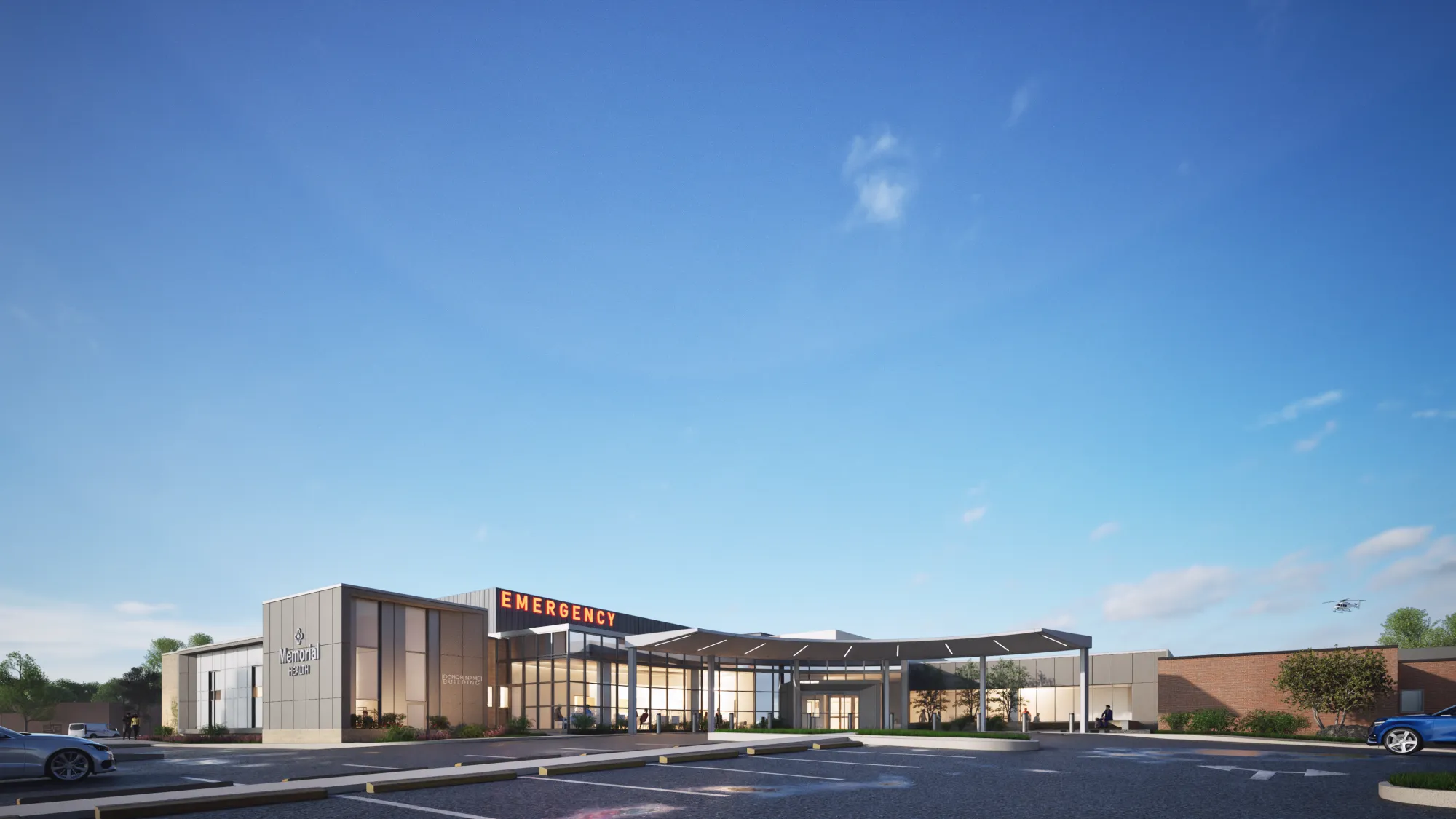
In one of the highest-pressure environments in the medical field, the architecture and design of an emergency department can reduce stress, improve patient well-being, and create efficiency across hospital systems.
The entrance to an emergency department (ED) does more than its fair share of work in a hospital. For some hospitals, it’s the building’s only 24/7 access point. For patients going into the ED, it’s much more than a doorway. It’s an introduction to what could be a stressful, potentially life-altering moment.
The ED is a portal to the complex system of clinical care and adjacencies designed to save lives, but with proper design, the space can shield the patient from additional stress that can make clinical interventions more challenging. We often say that EDs are chaotic places; our job is to use architecture to help reduce that chaos.
The goal of most building designs is to create a welcoming environment the moment a person enters the space. With an ED entrance, the challenge is to balance that welcoming feel while supporting critical clinical processes in service of patients, their loved ones, and the staff. These critical functions include ensuring security, supporting clear navigation, providing comfort, and maintaining clinical safety and operational efficiency.
Defining a Landmark in a Hospital’s Campus
Our team designs healthcare spaces like EDs with the patient and staff’s perspectives in mind. When Memorial Hospital needed a full renovation for its mature ED, the challenge was to expand while creating a new face for the hospital.
Memorial’s ED is located near the rear of the hospital—typical of most EDs due to the need for patient privacy, clear separation from the front door, and ease of access for EMS. The current ED entrance at Memorial, houses the patient walk-in, EMS, and decontamination entries literally feet away from each other. To better clearly direct these traffic flows and increase safety, the team designed separate entries on different sides of the ED.
If you’ve ever taken a loved one to the ED, you know the heightened stress while driving a car and navigating becomes much more difficult. Clear separate traffic flows and distinct patient entry canopy, lets the wayfinding be intuitive during these high stress situations, becoming the beacon to those arriving to the ED.
The team intentionally designed this beacon as a landmark at Memorial by creating a hierarchy of the entrances of the ED. An arched glass concourse that runs in front of the existing building creates a new, clear sense of public entry through its high translucency into the space, drawing people in, as well as it’s large, patient focused canopy.
The natural radius of the design helps to soften the sharp edges in a traditional entry, allowing people to more intuitively flow to where they need to go. Likewise, the nature of a curve creates a sense of privacy in the waiting areas without compromising clear lines of sight to their destination.
The Safe and Secure yet Welcoming ED
Just like in many EDs, from dense urban areas to rural hospitals, security is paramount. For the Memorial Hospital ED, it was also important that the entry design allowed for flexibility for future implementation of different security levels without detracting from the patient’s experience.
Proper scaling of the entry spaces allows for various weapons and bag scanning protocols to be added in the future for either the ED entry, for the hospital entry, or both if desired. Designing for reprieve between each of these specific areas prevents it from feeling like airport security, keeping the patient experience top of mind.
Most critical in security design in an ED is to allow for proper visibility to a patient in distress to move them more quickly through the security process and into direct clinical care. Having the security desk co-located with the ED registration means these patients can be assisted quickly.
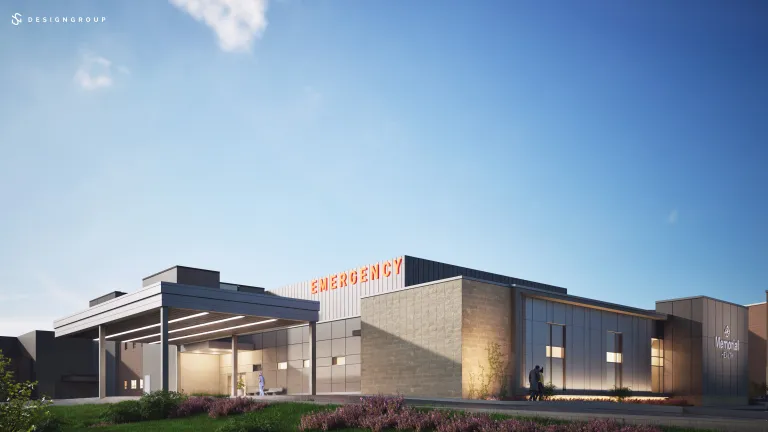
South side rendering of Memorial Hospital's emergency department.
Designing EDs with the Patients in Mind
Smart design for one of the highest traffic spaces in a hospital must focus on three fundamental elements: clear wayfinding, improving patient and staff experience, and improving clinical flows.
Wayfinding
Purposeful design cues that communicate easy navigation and campus wayfinding will always function better than signage. However, signage placed in key areas of the ED is important when you start looking to the interior of the ED. This in addition to clear lines of sight to doorways, to staffed desks where assistance is available, and to public amenities like vending, supports the patient experience.
Patient & Staff Experience
Creating intuitive flow through the space for patients to check-in, feel safe, and connect with care advocates for a holistic approach to the patient’s healthcare needs is primary in any design decisions.
Another design consideration when thinking about patient and staff experience is access to natural light in the department, especially in the waiting area. This transparency allows people to connect with nature through thoughtfully placed exterior landscaping. Windows and sunlit areas, like the new waiting room to the Memorial Hospital ED, make a space feel more calming, giving patients space to find reprieve. Whenever you are waiting in an emergency department, it can be stressful and studies have shown access to daylight helps to drop cortisol levels, providing a calming effect for both patients and their loved ones.
Improved Clinical Flows
The location of the different entries is critical for patient safety and quick access to potential life-saving care. For instance, the EMS entrance needs to be properly located to provide privacy for patients arriving by ambulance but also located to quickly be moved to trauma rooms. Similarly, these entrances are in direct proximity to the charge nurse to allow for rapid care team response.
Like an EMS entrance, walk-in entrances also want to be placed so they can quickly respond to a walk-in patient who might need critical care. Sightlines from triage to the waiting room are important to have clinical oversight over patients who might need to wait during a high census event. Designing with streamlined clinical flows allows for improved throughput, getting patients to the care they need quicker.
The emergency department is a crucial front door to a hospital regardless of its location within a medical campus. Even though the ED may be thought of as the back of the hospital, it can be welcoming with intentional and thoughtful design, helping to reduce the stress of those seeking care. The ED should help define the perception of the entire hospital campus, how that hospital interacts with the surrounding community, and how the public perceives the level of care provided by that hospital.

